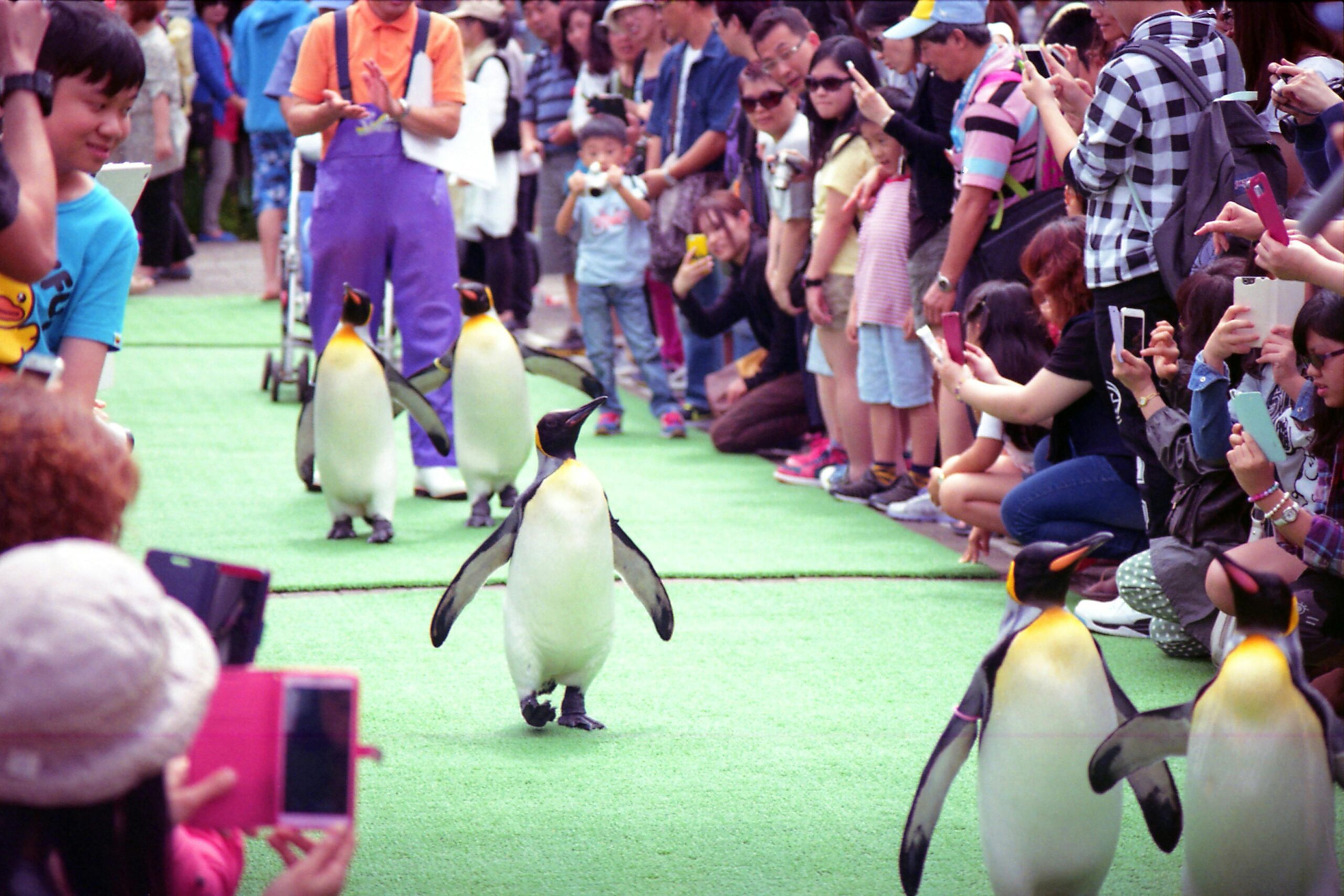
mathematics is a zoo
What is mathematics? How would you answer this question?
David Hilbert, who lived in the first half of the twentieth century and was one of the most influential mathematicians of his time, was asked this question. He answered that mathematics is a game played according to certain simple rules with meaningless marks on paper. On another occasion he said that mathematics is, erm, what mathematicians do.
Clever answers, but of no use!
A very long time ago I listened to an argument about this question between two professors and was very taken by a description by the late Rolf Schwarzenberger of mathematics as a zoo.
Imagine an enormous zoo full of all sorts of animals. As you walk through the zoo you see familiar creatures. You know about their habits, the food they eat, the countries they come from. Some are less familiar and you know little about them. You notice that some animals are similar to other ones you have seen while others are completely different. There are animals that surprise you, animals that look extraordinary and others that are small grey and uninteresting.
Deeper into the zoo the nature of the animals begins to change and it becomes difficult to understand how they live, why they evolved that way. After a while you realise that there is more to the zoo than you imagined and that there are inaccessible depths that you have to accept you will not be able visit.
OK, that sounds interesting, but why is mathematics like a zoo?
Start by searching the web for a list of the main branches of mathematics. You will get lots of different answers, some longer some shorter. Some lists will contain things like calculus and trigonometry, others will not, but instead will include mathematical analysis which could be seen as embracing calculus, trigonometry and a whole range of other topics. Like the animals in the zoo, there are lots of different ways of arranging them.
You could point out that zoologists have definitive ways of classifying animals and, while that is true, there are disagreements and controversies. Professional mathematicians also have their approach to classifying areas of mathematics, and they too have their disagreements and controversies.
Like zoology, mathematics has a way of acquiring new areas of study. For example, the mathematics of social choice became a topic area in its own right in the last quarter of the twentieth century when surprising results were announced about mathematics applied to social activities such as voting and auctions. We have Arrow’s Theorem which says, essentially, that there is no such thing as a fair voting system, at least not of the sort we use most commonly. Also, we have Vickery’s work on auctions which demonstrated that the auction method that gives the best outcome to both buyer and seller are closed bids in which the winner pays the price of the second-highest bidder. And, yes, this method is used millions of times a week when people bid for advertising space on the web.
If we dig deeper, say into the topic of algebra, I can think of a lot of topics that are called “algebraic something-or-other” such as algebraic analysis, algebraic number theory and algebraic topology. The last topic is one I studied in depth as a student. These are all areas of mathematics in their own right. They use approaches that are recognisably algebraic, but significantly different from each other. So we have subspecies in which the animals are different but related to each other.
And of course we have the unsolved problems, the new branches yet to be created and the new discoveries yet to be made. Like zoology, mathematics has practitioners who have strong views about the ways things should be done. There is the constructionist movement that insists all mathematics should be constructed from basic building blocks, while other mathematicians are comfortable working with abstract ideas such as different sizes of infinity.
A significant element of learning mathematics is what I call “naming the animals”, which is about knowing and understanding the technical terms that define David Hilbert’s “meaningless marks on paper”. While the zoo analogy won’t help you lean mathematics, it might at least give you a sense of the nature of the subject.